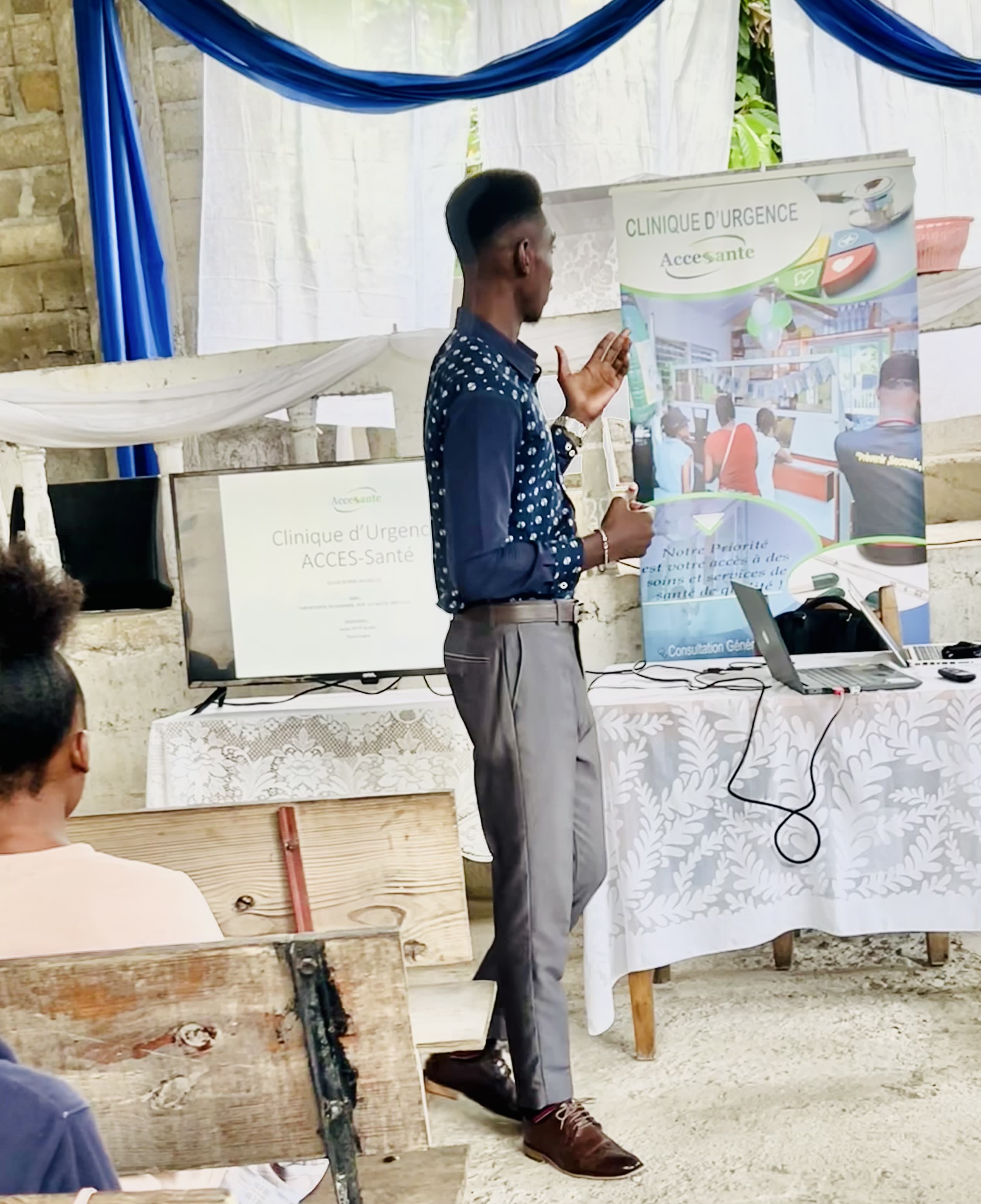
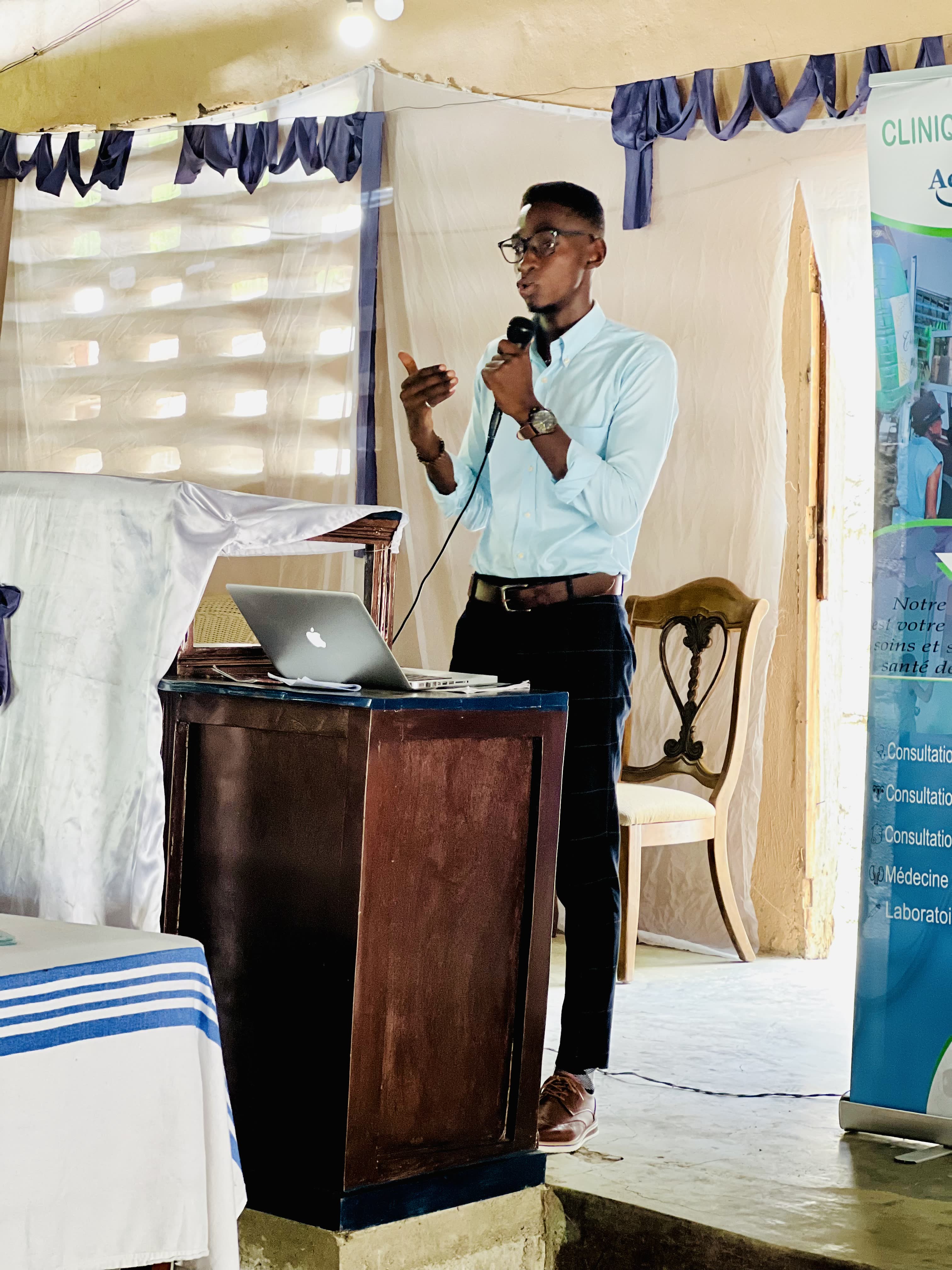
In Haiti, where health challenges intertwine with recurring social and economic crises, mental health occupies an insufficient place in public debate and prevention strategies. Yet psychological well-being constitutes a fundamental pillar of quality of life, social productivity, and community cohesion. In response to this gap, Accès-Santé Emergency Clinic decided to take a decisive step on October 13, 2024, by organizing a training and awareness session devoted entirely to mental health issues. This initiative took place at the heart of the Limbé community fabric, within Bethel Church's youth association, a trusted partner in this local mobilization effort.
Mental Health in Haiti: Accès-Santé Mobilizes Limbé Community

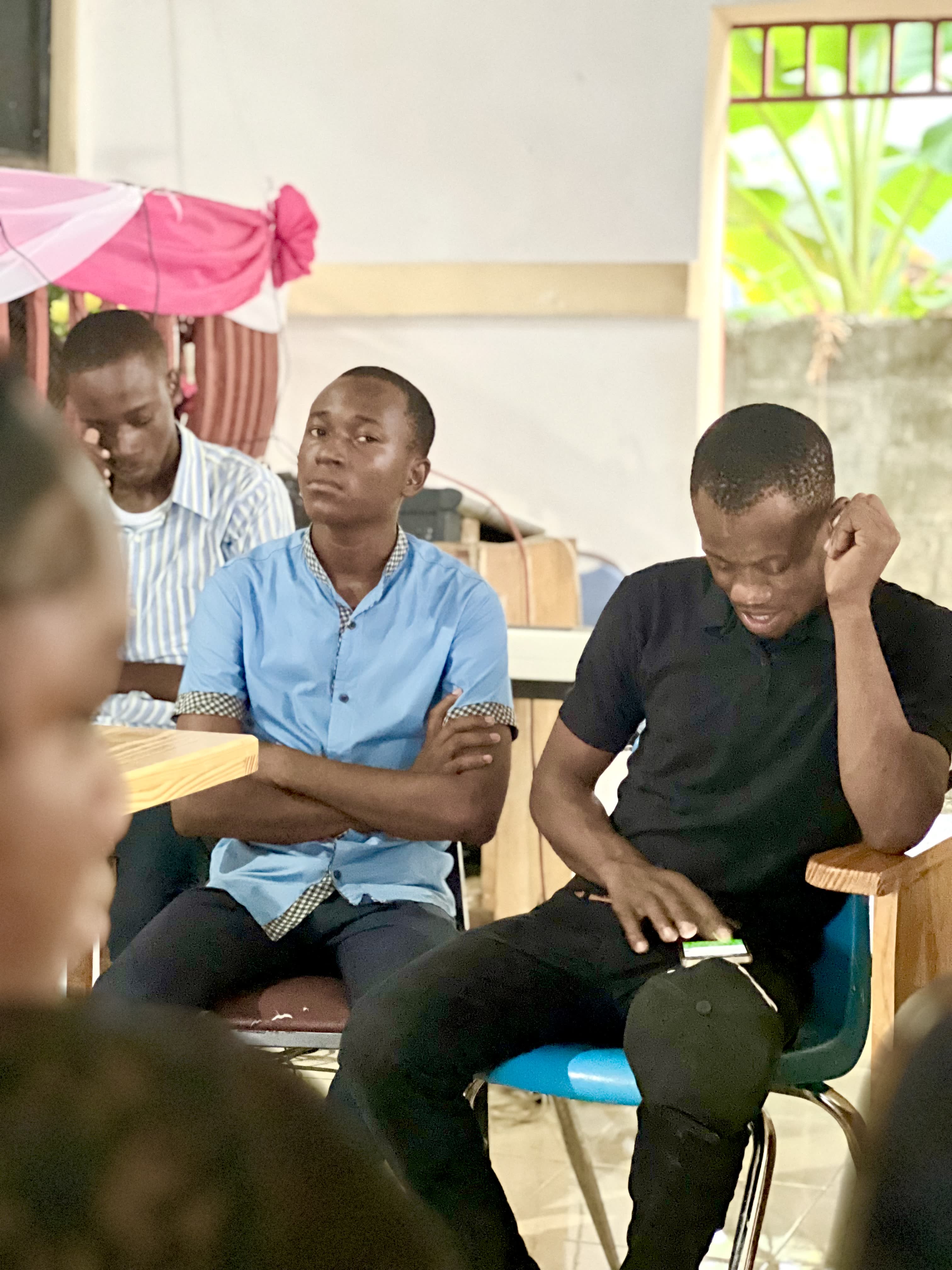
On October 13, 2024, Accès-Santé Emergency Clinic organized a crucial training on mental health within the young people's association of Bethel Church in Limbé. This initiative addresses a fundamental need in Haiti, where psychological health remains too often marginalized in public priorities.
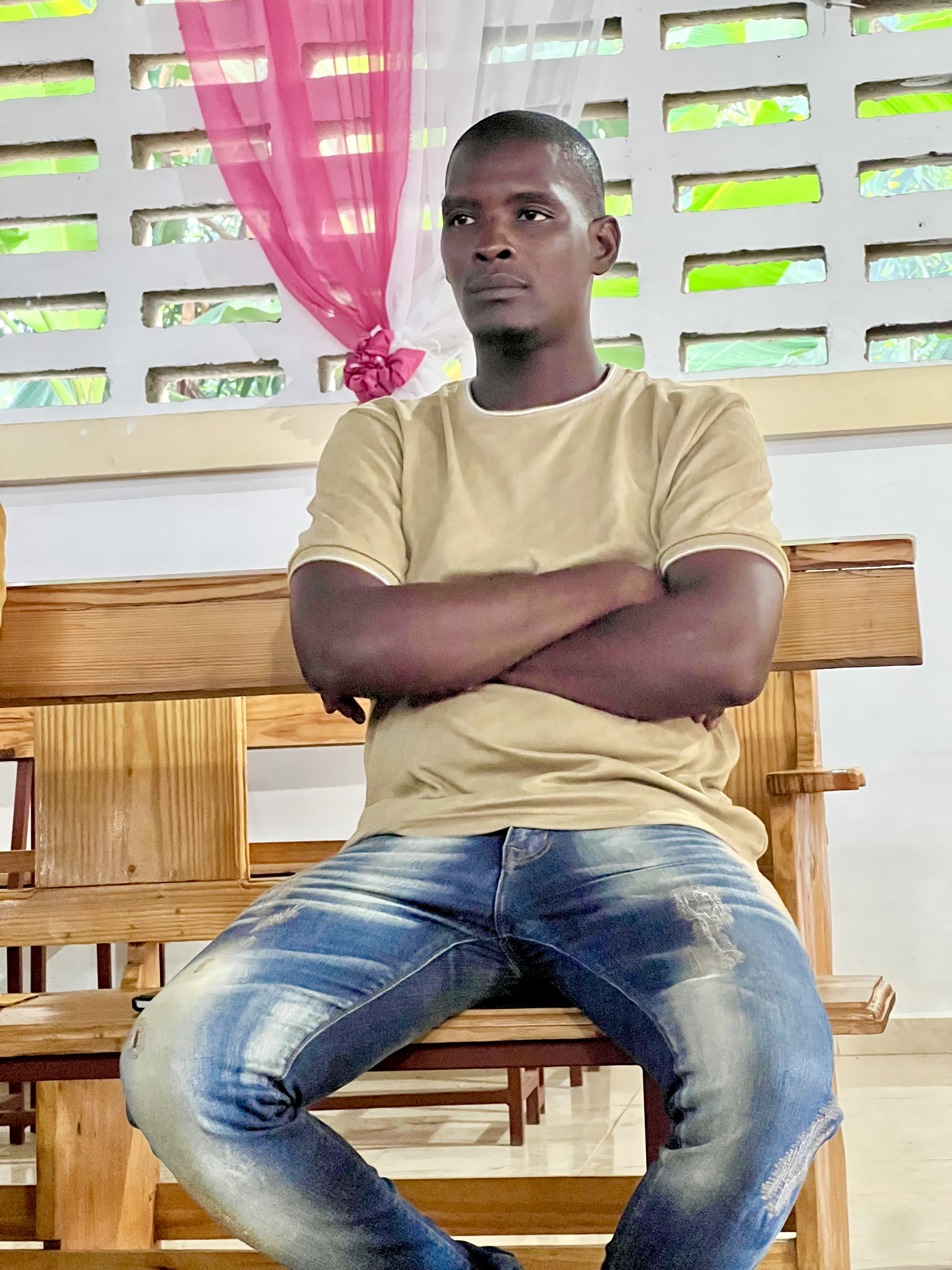
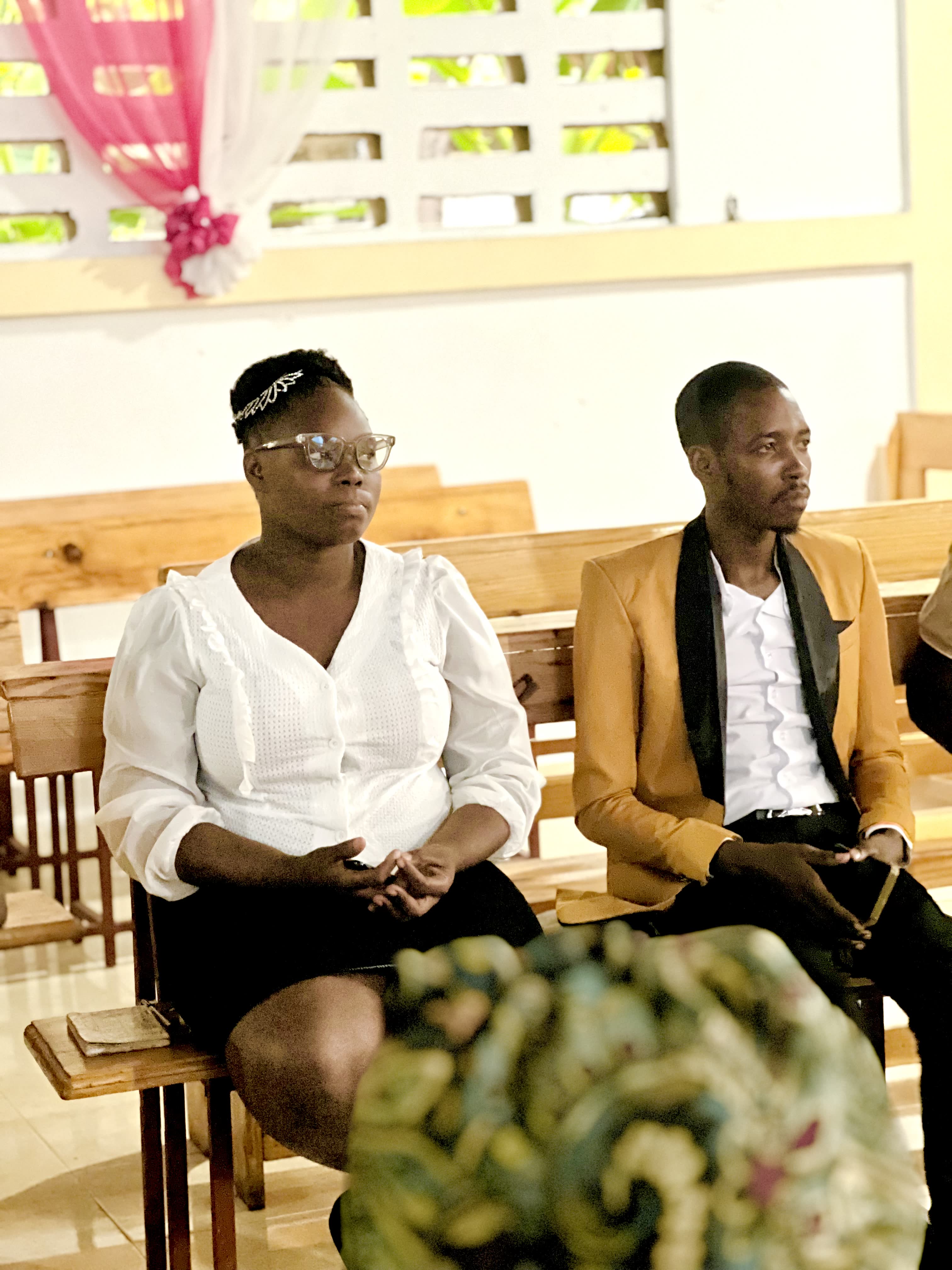
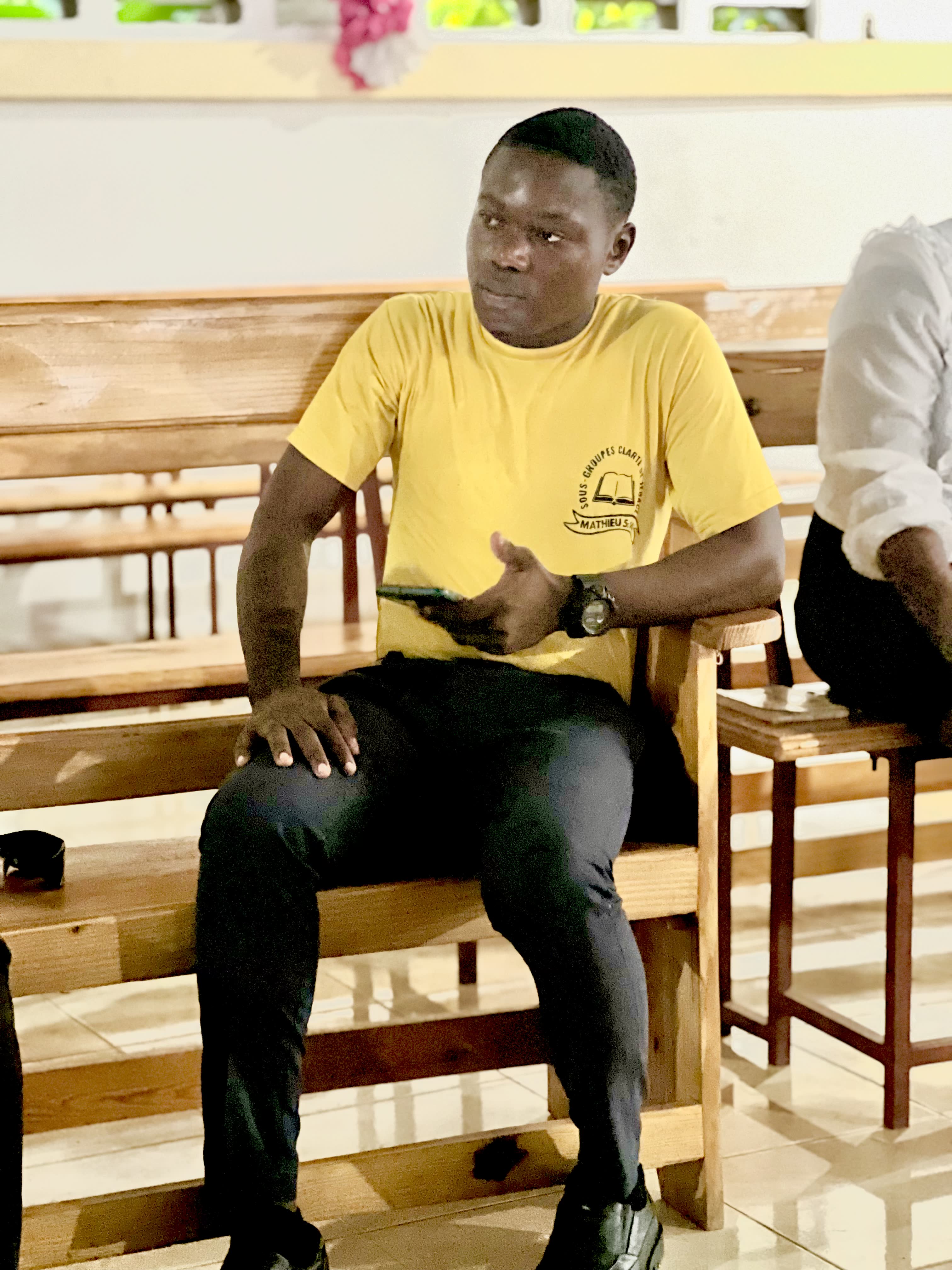
Twenty-five participants from local religious and community structures benefited from an in-depth awareness session. They acquired practical tools to recognize signs of psychological distress and implement culturally adapted prevention mechanisms.
This training materializes Accès-Santé's commitment to truly holistic prevention and strengthening local capacity for self-care in a context of persistent crisis.
The training was structured around essential themes aimed at equipping participants for concrete and sustainable preventive action. During this structured day, Accès-Santé speakers explored fundamental psychosomatic mechanisms, allowing the 25 participants present to better understand the complex links between psychological well-being and physical health. The session also emphasized identifying psychological vulnerability factors specific to the immediate environment of young Haitians, too often exposed to multiple stressors intensified by recurring sociopolitical shocks. Finally, a practical component dedicated to prevention and intervention mechanisms allowed participants to master concrete and culturally relevant tools, directly transposable to their respective family, religious, and community realities.
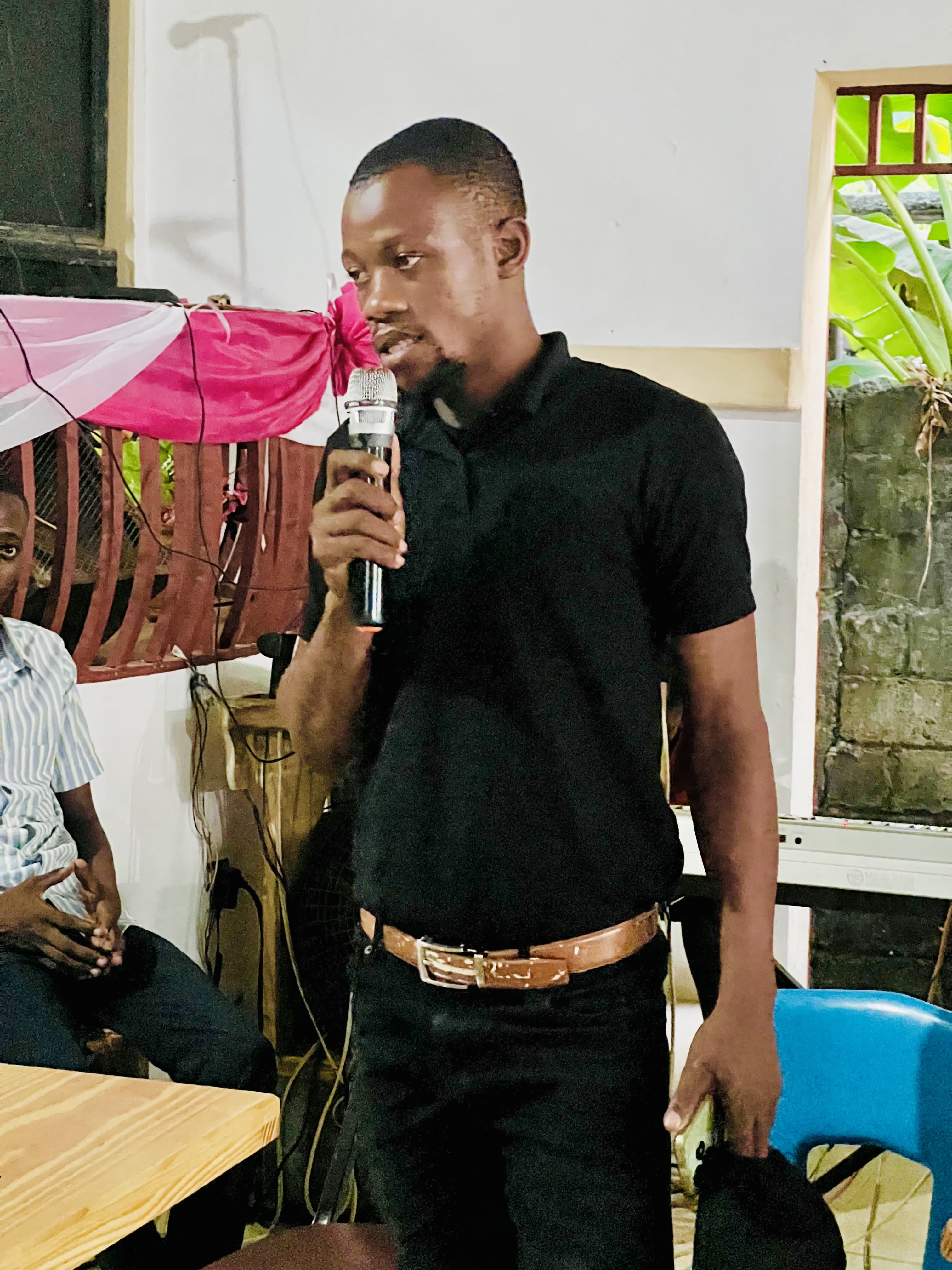
The active engagement of participants throughout the day testified to the urgency felt and the undeniable relevance of the subject matter. The exchanges were characterized by great openness and clear motivation from young people to internalize this knowledge and become agents of change within their respective networks. The atmosphere that developed in the training room reflected collective awareness: mental health is not a luxury reserved for a few, but a vital necessity for Haitian society as a whole. The president of the youth association, Mr. Dorsaint, particularly embodied this collaborative dynamic, fostering authentic synergy between Accès-Santé's specialized health resources and community structures rooted in the daily lives of populations.
Mental health, a fundamental condition for quality of life and community cohesion, must stop being relegated to a secondary priority in public affairs. Each participant becomes a vector of change in their family, religious, and community environment.
The critical importance of this initiative lies in its capacity to fill a significant gap weighing heavily on Haitian public health. In Haiti, where external pressures multiply and intensify under successive crises, the absence of systematic mental health awareness represents a major obstacle to individual and collective resilience. The October 13, 2024 training provided twenty-five participants with essential conceptual and practical tools: ability to recognize early signs of psychological distress, deep understanding of vulnerability factors in their immediate environment, and mastery of effective prevention mechanisms rooted in local cultural realities. Beyond the training day itself, the expected impact extends far beyond the walls of the room: each of these participants will potentially become a multiplier of impact, spreading awareness to family, religious networks, peers, and community, thus creating concentric circles of mobilization around mental well-being.
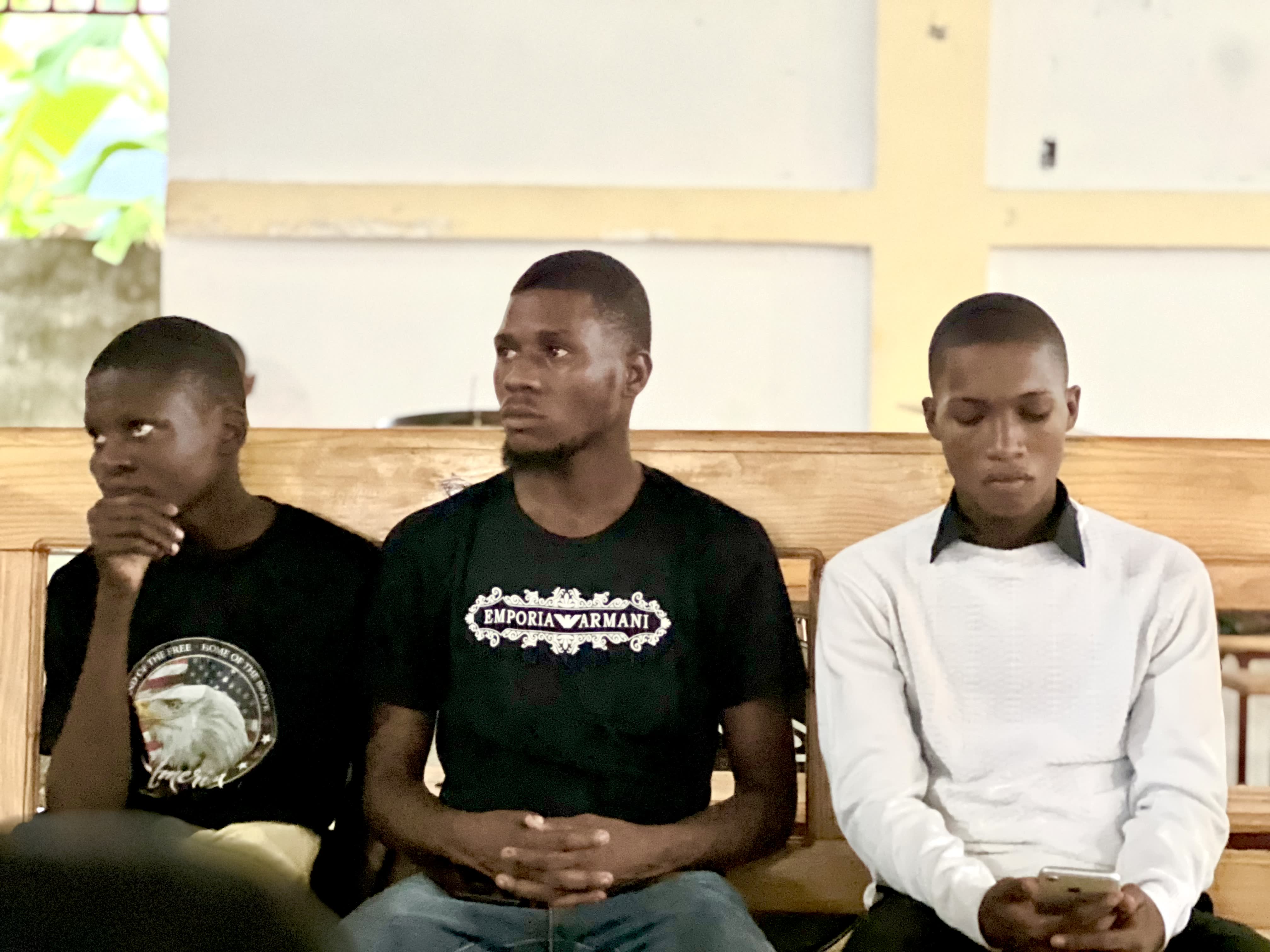
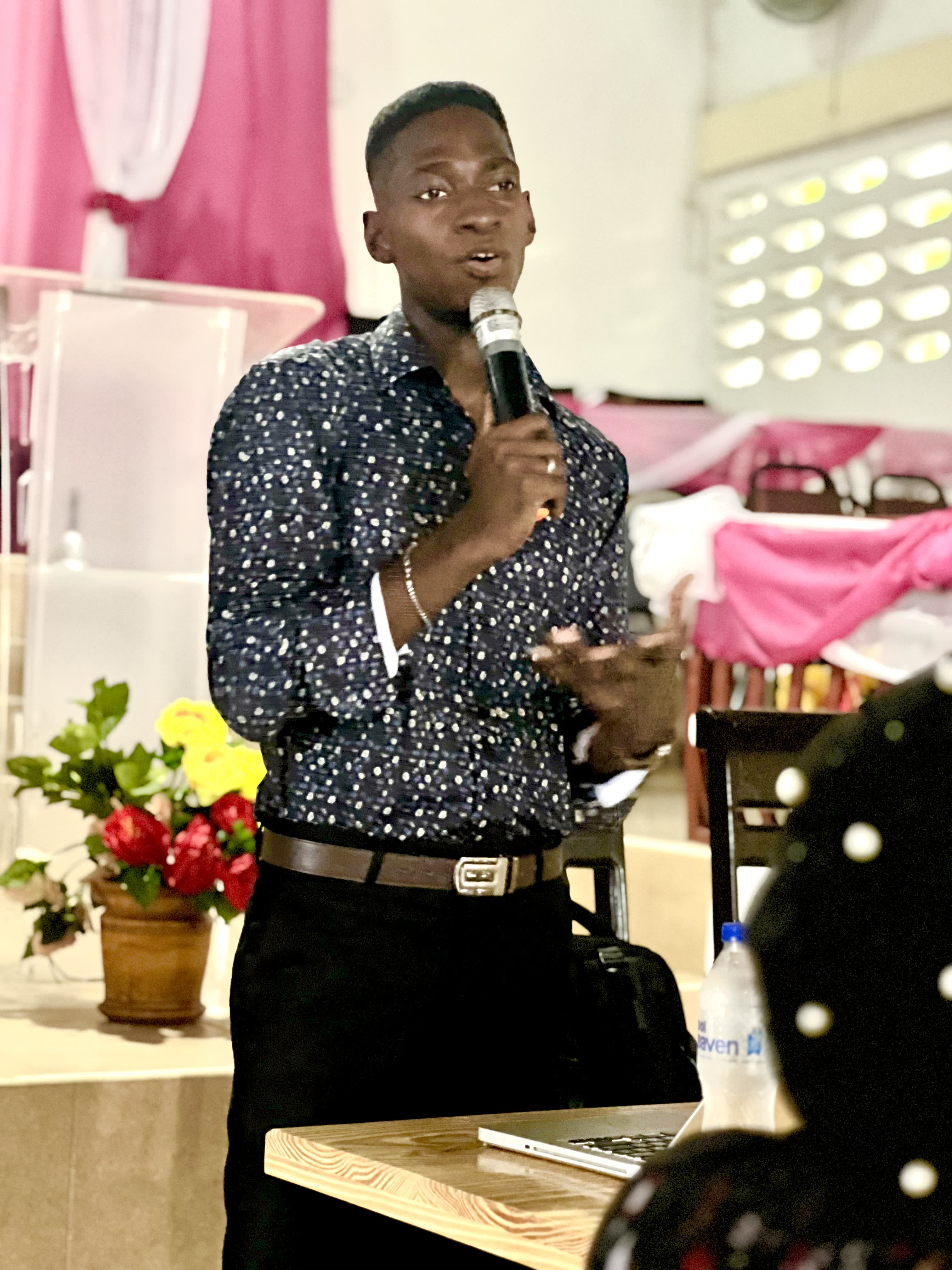

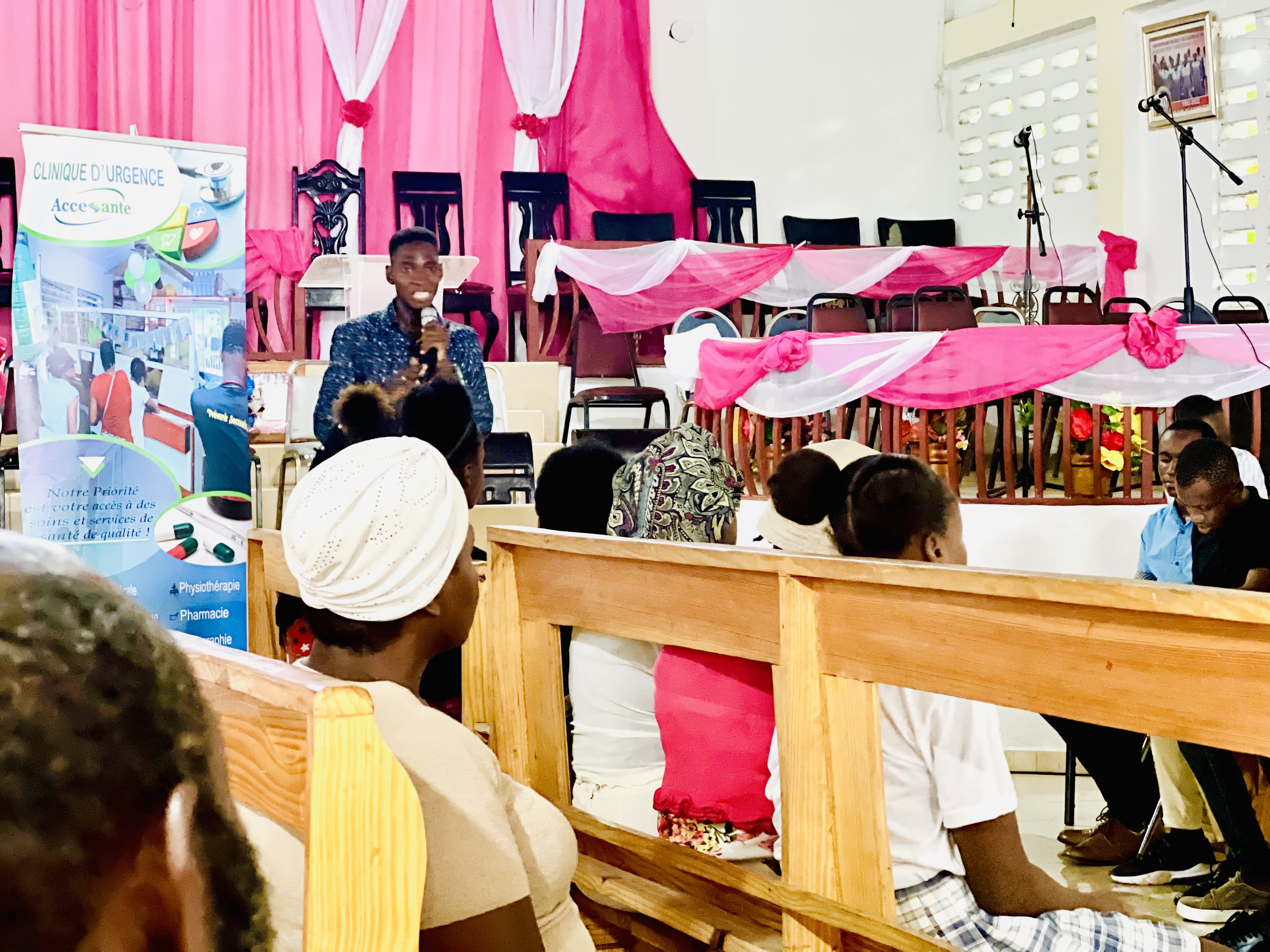
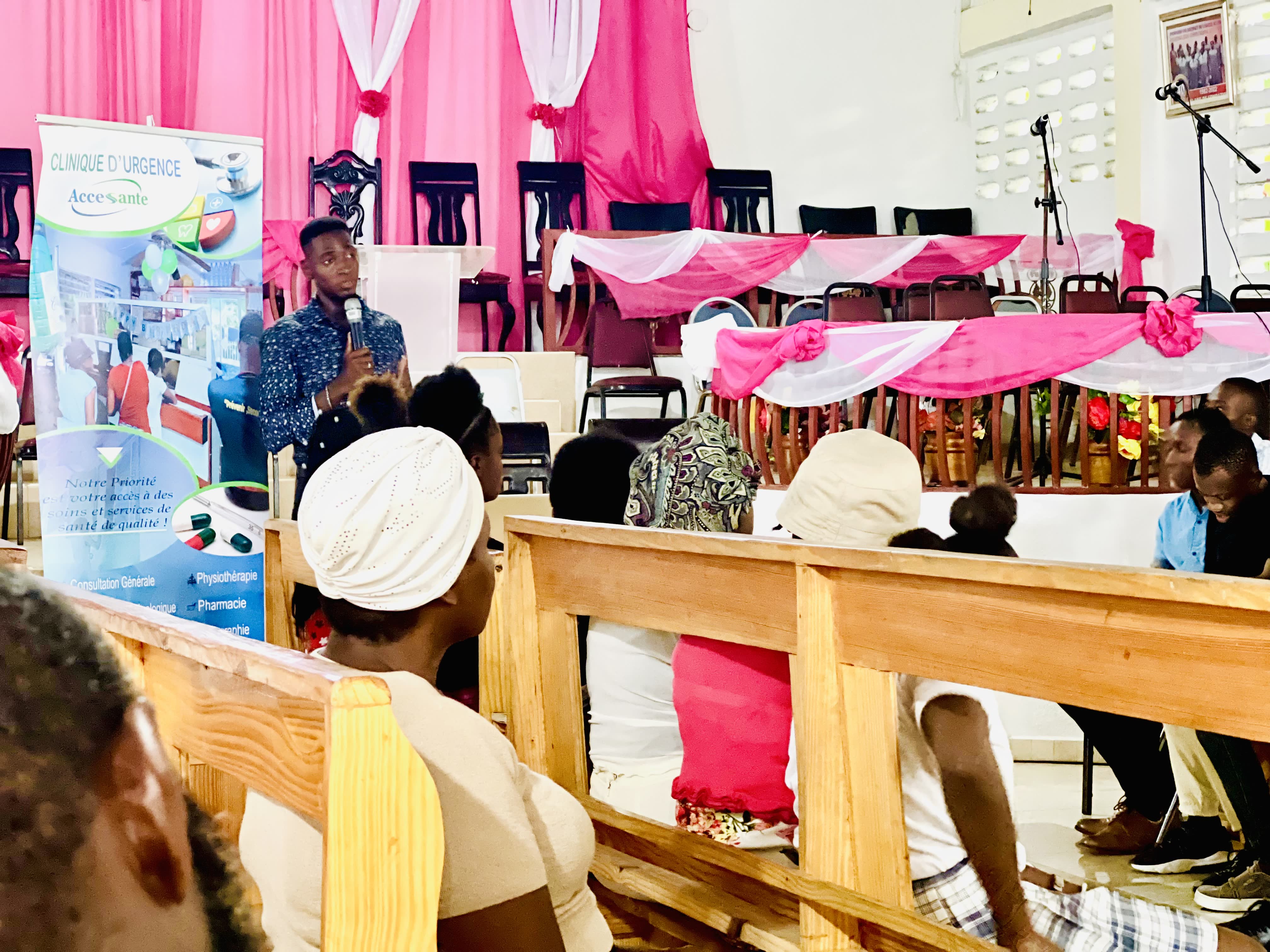
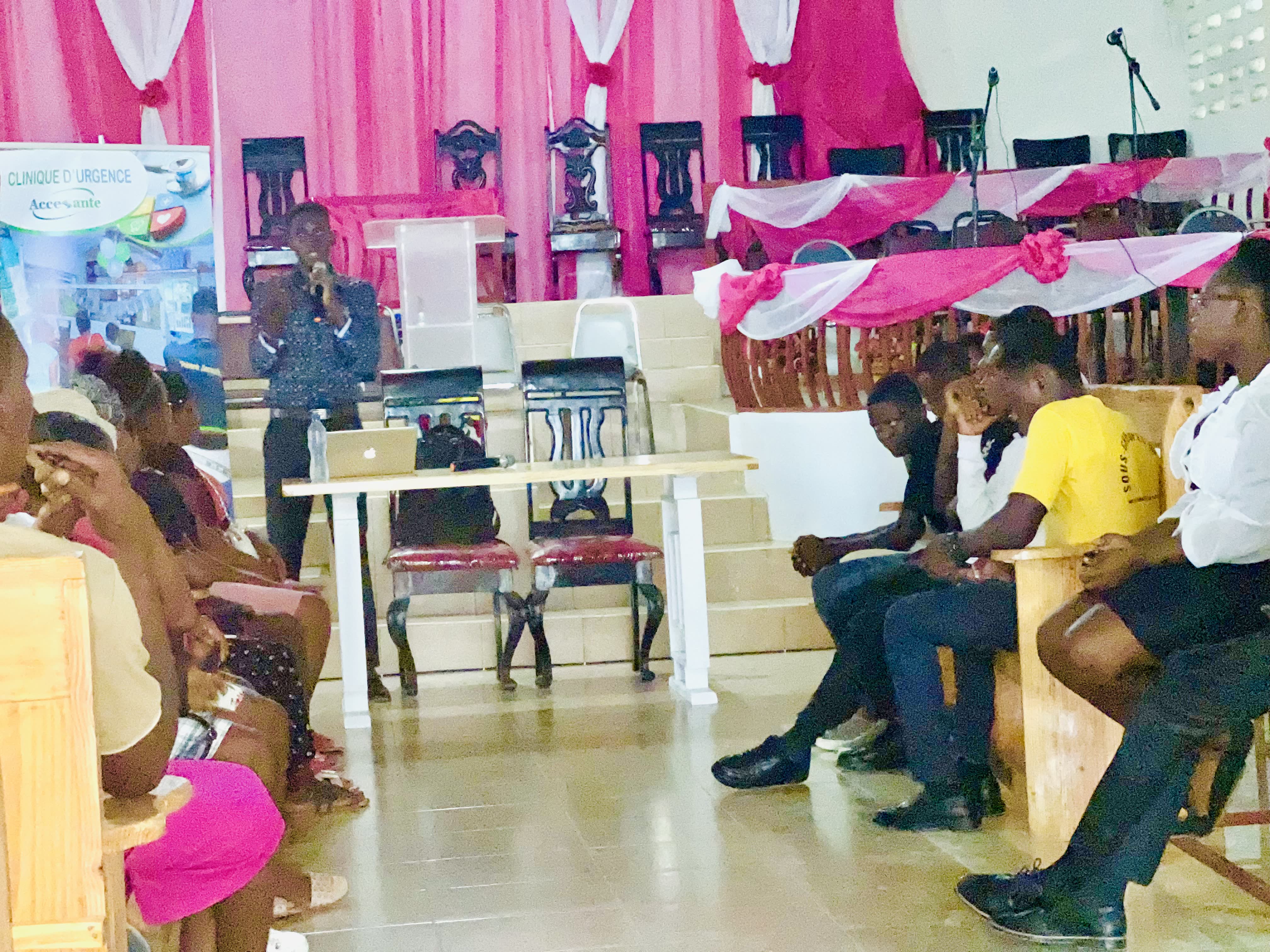
This training aligns perfectly with the cardinal mission of Accès-Santé Emergency Clinic: to promote health in all its dimensions, prevent pathologies before they manifest in critical form, and strengthen bonds of proximity and trust with the populations it serves. By organizing this awareness session at the heart of a religious institution in Limbé, the Accès-Santé team reinforced its territorial presence and demonstrated its unwavering commitment to truly holistic prevention, transcending the curative care framework to invest in the preventive dimension. The strategic partnership established with the leadership of Bethel Church's youth association, particularly through the dynamic involvement of President Mr. Dorsaint, exemplifies the collaborative approach our institution favors. This synergy between specialized health resources and existing community structures, already rooted in the local social fabric, creates fertile ground for sustainable dissemination of relevant health messages and progressive strengthening of local self-care capacity.
The concrete results from this October 13, 2024 day constitute far more than a simple one-time information activity: they represent a substantial step toward the urgent normalization of mental health discussion within Haitian community structures. The twenty-five participants leave enriched with a deep understanding of psychosomatic mechanisms, improved ability to identify psychological vulnerability factors in their environment, and above all with a profound and renewed conviction that prevention and education are the true pillars of robust and resilient mental health. Accès-Santé Emergency Clinic is firmly committed to continuing and amplifying this essential awareness work, collaborating progressively and strategically with other community structures in Limbé and beyond. This first training opens a dialogue bearing profound hope in a Haiti that needs, more than ever, solid health landmarks, authentic collective mobilization, and persevering action around the psychosocial well-being of all its children. Each participant becomes an ambassador for change, contributing to building a society where mental health is no longer a taboo but a shared priority.